Read the full statements from all our Patrons below:
- Zoe Wanamaker
- Lord Joel Joffe
- Rabbi Dr Charles Middleburgh
- Brian Pretty
- The Reverend Professor Paul Badham
- Sir Michael Holroyd CBE
- Lesley Close
- Professor A.C. Grayling
- Sir Terry Pratchett
- Miriam Karlin OBE
- Rosemary Brown OBE
- Professor Ray Tallis
- Sophie Pandit
- A.N. Wilson
- Nick Ross
- Dr Liza McDonald
- Patricia Hewitt
- Heather Pratten
- Matthew Wright
- Jo Brand
- Janet Suzman
- Diana Melly
- Professor Eric Bolton C B
- Deborah Moggach
- Dame Elisabeth Hoodless DBE
- Nell Dunn
Zoë Wanamaker
"Being incapable of helping a loved one to die when they are at the end of their life, suffering and asking for help is undignified and wrong, and I know this having witnessed it myself at close hand. I fully support the work of Dignity in Dying to both change the law to allow assisted dying in this country and to provide advance decisions so that people can take control over the decisions they would make at the end of their lives if they find themselves unable to do so."
Lord Joel Joffe
"I support Dignity in Dying because I care about suffering and want the law changed so that those who presently suffer terrible deaths will in future have the option to end their suffering through ending their lives at a time and in the manner of their choice."
Rabbi Dr Charles Middleburgh
"I believe that the exercise of free will concerning the end of life, and the timing of the end of life, is an essential human freedom. I believe that while religious dogma may dictate or limit the choice of believers it should not be imposed on others. I support moves to create suitable laws so that terminally ill men and women who wish to may end their lives with dignity, rather than being kept alive against their will. I acknowledge the many challenges around legislating on these matters but feel that the proposals put forward by Dignity in Dying are sensible, sensitive and workable."
Brian Pretty
"My wife, Diane Pretty, had the terminal illness motor neurone disease and wanted to receive medical assistance to die with dignity before she had to endure the distressing symptoms encountered during the last days of the illness. As this is currently against the law in the UK, Diane asked the courts and the Government to allow her this basic human right. All refused. During the last weeks of her life, Diane was in considerable pain and distress. The very things she did not want to experience. I can honestly say I would not wish to see anyone else go through the same as her. As a result of these experiences, I firmly believe that the law in the UK should be changed to allow terminally ill mentally competent adults to be allowed medical assistance to die if it is at their own persistent request."
The Reverend Professor Paul Badham
"My starting point is a conviction of the importance of Jesus' response when asked what were the greatest of all the laws of religion. Jesus stated that all religious law and prophetic teaching depend on loving God with heart, mind, soul and strength and on loving your neighbor as yourself. He clarified the implications of loving one's neighbor through his "golden rule" that we should always treat others as we wish to be treated ourselves. The former Oxford professor of Moral Philosophy R.M. Hare argued that
There is "no moral question on which such teachings have a more direct bearing than the question of euthanasia.."[1] Opinion polls repeatedly show that at least three-quarters of respondents would wish to be given assistance to die if they found themselves suffering unbearably in the final stages of a terminal illness. It is also noteworthy that some highly ethical doctors help out colleagues and their own loved ones when facing terminal illness. If they were to extend assistance to die to their patients they would literally be fulfilling Jesus golden rule of treating others as they wish to be treated themselves. [2]"
[1] R.M. Hare, Essays in BioethicsOxford, Clarendon 1993,p.72
[2] Mary Warnock and Elisabeth Macdonald, Easeful Death Oxford 2008 p.122
Lesley Close
"I have supported Dignity in Dying's campaign to change the law to permit assisted dying since my brother John Close died with help from Dignitas in May 2003, aged 55. Motor Neurone Disease had robbed John of almost everything which defined him as human, including his dignity, but the knowledge that he would be in control of his death was a source of great comfort to both of us. John's death was very sad but my grief was lessened by the way he died: I only wish he had been able to die in the same peaceful and dignified way at home in Milton Keynes after discussing the matter with his sympathetic GP."
Professor A C Grayling
"I believe that decisions about the timing and manner of death belong to the individual as a human right. This is especially relevant in cases of terminal illness, painful or undignified unrelievable illness, exhausting old age, and other circumstances where an individual might wish to make the autonomous decision to end his or her life. I further believe that it is wrong to withhold medical methods of terminating life painlessly and swiftly when an individual requests them on the basis of a rational and clear-minded sustained wish to end his or her life."
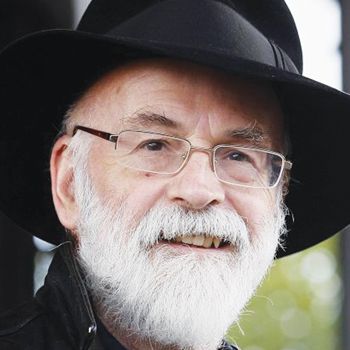
Sir Terry Pratchett
"I endorse the work of Dignity in Dying because I believe passionately that any individual should have the right to choose, as far as it is possible, the time and the conditions of their death. Over the last hundred years we have learned to be extremely good at living. But sooner or later, and so often now it is later, everybody dies. I think it's time we learned to be as good at dying as we are at living."
Ms Miriam Karlin OBE
"Having been a member of Dignity in Dying for thirty years I fully support the campaign to ensure that all people have, what they consider to be, a good death. Advance decisions are an important way of making sure our choices at the end of our lives are carried out. The campaign to change the law to allow assisted dying for terminally ill adults is also necessary, as sadly for some people palliative care is not enough, and for those few the option of an assisted death at the end of their lives would provide the choice and control we all deserve."
Rosemary Brown OBE
"My father, who was suffering from cancer and no longer wished to live, died as he chose: in peace and dignity, with my mother beside him. I passionately hope that, if I too were terminally ill, in pain or increasingly dependent for the smallest everyday activity and was finding life unbearable, I could be allowed to die at a time of my choosing.
I can think of few worse horrors than being condemned to linger on, trapped alive days without end, in an existence that was utterly joyless. The terrible thing is that, if I had to travel abroad to a country where assisted death was legal, I couldn't have my adored husband with me in my last hours, knowing that if he accompanied me, he could risk being sentenced to up to 14 years in jail.
I know that I am not alone in wanting the law changed. As author of "The Good non Retirement Guide", I was contacted by many anguished individuals, desperate for advice that I couldn't give.
I equally know that not everyone feels the same way and I understand and respect them for their beliefs. The point I would make, however, is that they are free to make their choice. But why should they be able to deny freedom of choice to the many thousands of others, who want reassurance in law to know that, if terminally ill and no longer wanting to live, they could be allowed to die in dignity without fear of a loved one being imprisoned for holding their hand at the end."
Professor Ray Tallis
"After many debates with myself, and with others (particularly when I was Chair of the Committee on Ethical Issues in Medicine of the Royal College of Physicians) I am entirely persuaded of the ethical case for giving people the right to seek assistance in dying when they have a terminal illness with symptoms that are both unbearable and unable to be alleviated by good care. As a doctor for over 35 years, I became increasingly aware of the failure of even the best care to deal with the suffering of some patients. International experience has convinced me that the availability of assisted dying not only benefits the small number of people who will avail themselves of it but will drive improvements in all aspects of end-of-life care. The present clinical, ethical, and legal fudge - and a law which is discredited in practice - is dangerous for patients and also for professionals."
Sophie Pandit
I have been a supporter of Dignity in Dying since my mother, Dr Anne Turner, chose to have an assisted death in 2006 at Dignitas in Zurich. She had been diagnosed with Progressive Supranuclear Palsy and had witnessed the dreadful suffering and death of my father from a similar degenerative neurological illness. She was adamant that she did not want to endure the inevitable debilitation and suffering that the illness would bring, so after a failed suicide attempt at home decided that the only option was to go to Dignitas. As she was terrified that she would not be physically fit enough to travel, she died whilst she still had some quality of life left. My brother, sister and I were to accompany her to Dignitas and my mother was frightened that we could face prosecution under the Suicide Act.
I think that society needs to show compassion to terminally ill people who face terrible suffering before their death, by giving them the option for an assisted death before that suffering becomes unbearable. Once my mother had been accepted for an assisted death, she was able to enjoy her life for the remaining time she had, greatly reassured that she would be spared further suffering.
A.N Wilson
"It is because we believe in the dignity and value of life that we hope for a good death. This is what Dignity in Dying hopes to permit and I passionately support its aims. To linger on against my will on a half-life is no life at all. It is death-in-life. In the past when the natural end had come we were delivered by pneumonia. No such luck today. For myself and for any whom I love I want the legal option to recognize that the natural end has come and merely do by pharmaceutical means what in the past would have been effected by merciful mother nature."
Nick Ross
"Ethical judgement, like life itself, is inevitably on a slippery slope; very few important moral dilemmas are simply a binary choice between right and wrong. So much depends on context. The old assumptions that life is sacred was never adhered to when it came to warfare or criminal retribution and was at best be a shorthand. Now that we know so much about the biochemistry and evolution of life itself the issues of life and non-life deserve nuanced consideration. I reject dichotomies such as: life must be preserved at all costs and death is never to be hastened. Thank heaven we don't still bury at crossroads with a stake through the heart those who commit suicide, and I see it as almost inevitable, and certainly to be welcomed, that society will become more understanding, and more sophisticated, about voluntary euthanasia too. As with suicide, it is right to strive to find better options, but when the alternatives have run out it must surely be wrong to for society to insist that people suffer so we can have an easy conscience."
Liza McDonald
"My work as a cancer physician inevitably brought me into contact with dying people. I saw how essential it is to patients themselves and to surviving families, especially children, that death was dignified with a sense of safety and control. I think that assisted dying is an important choice to be offered in the rare situations where doctors are unable to control unbearable symptoms."
Patricia Hewitt
"Over many years, I have become convinced of the need for a change in the law to protect people with terminal illness who have made the painful decision to seek help in dying. No-one should ever be forced or pressured into a death they do not want; but all of us should have a real choice. This is why, once I left government, I joined Dignity in Dying and will go on supporting their campaign until we succeed."
Heather Pratten
"As someone who helped her son to die when he could no longer face the suffering caused by Huntington's disease, I understand fully the need to have a safe, regulated Right to Die system that takes the pressure off family. After all, who would let their loved ones die alone? In my case this meant an appearance in court and a criminal conviction. It is vital that advance decisions are made and people are listened to when they wish to have a good and dignified death."
Matthew Wright
"From personal experience I have seen how difficult things can get when those close to us are looking towards the end of their lives, ravaged by disease. Having seen my father die in this way it became very clear to me that we as society need to grasp the nettle and deal with this contentious issue in a way that is humane and acceptable to the majority of right thinking people. I believe in personal freedom to chose - a freedom currently being denied the people of this country. We need a compassionate assisted dying law to enable competent adults to choose help to die if their suffering is unbearable as their lives are coming to an end."
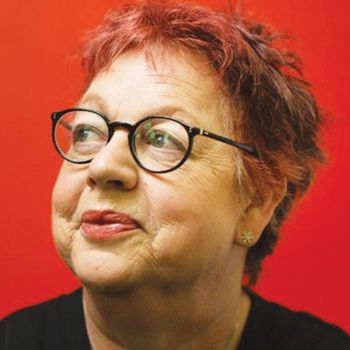
Jo Brand
"As a child there existed in my mind a nagging fear about this thing called death, and I can remember feeling so unsettled and troubled I could never share my anxieties.
A strange paradox that as I have become older it is a subject I very much wish to speak about. I want to give an assurance to the people I love that the circumstances of their death will be "good", to be celebrated, and their final hours will be reflective of life well lived."
Diana Melly
My husband George died at home and pain free. If he had suffered at the end of his life and wanted an assisted death I would have gladly accompanied him to Switzerland. I knew that and he knew that. He trusted me. That option is open for me as well because I have the friends who would assist me and enough money to pay for it. Until the law is changed to allow safe assisted dying in the UK, that isn't an option for everyone. Some people don't have loved ones willing to help, and many people don't have the resources to go. That is why I support Dignity in Dying and the campaign to change the law to allow assisted dying here in the UK.
I once shot at a pigeon when I was a child, and its agony is seared to this day on my memory as it flailed about, hurt and unmendable. In tears, I simply had to find the courage to put it out of its misery. How much more unbearable to watch another human being in unmendable pain, and worse still, someone you know and love. We have the means to make the end of a person's life peaceful and dignified, and it's high time the law found its way to allowing this mercy to be made legal, with upfront safeguards. Faith should not be an argument against, because faith is unarguable-with. Anyway, I daresay there are very many people with faith who do support a compassionate change in the law. The Director of Public Prosecutions has done all he can to clarify the existing law, so the next step is a safeguarded assisted dying law so that Britain can enter a grown-up world where the science of medicine - ever evolving and improving its expertise - need not continue to prolong a life that desires only peace.
Dr Ann McPherson CBE
"As a GP for almost 40 years and now as a patient with pancreatic cancer I feel strongly that assisted dying should be part of good palliative care for those who are terminally ill.?
Deborah Moggach
"My
mother went to prison for helping her terminally ill friend, who had nowhere
else to turn, to end her own life. I know the whole area is a legal minefield
and we need to ensure that those who are vulnerable are protected, but surely
there's a more humane way we can start to address the issue of assisted dying,
and that's why I support the work of Dignity in Dying."
Dame Elisabeth Hoodless DBE
"Respect for people's freedom to choose is
reflected in our abortion laws and civil partnerships. Respect for people's
choice on the ending of their life should be included too. As a medical
social worker I witnessed too much quite unnecessary pain and suffering- that
is why I support Dignity in Dying. The nation needs a safe, regulated system
that takes the pressure off family and medical staff.?
Nell Dunn
I support Dignity in Dying because I saw my father die
in so much pain and have since heard a retired palliative care doctor say that
while the law is as it is, doctors can't assist patients to die however huge
the pain, because it is a choice between feeding their families or going to
prison.?